
After AI-Facilitated Small Group Discourse at Kindezi at Gideons Elementary, Atlanta, GA

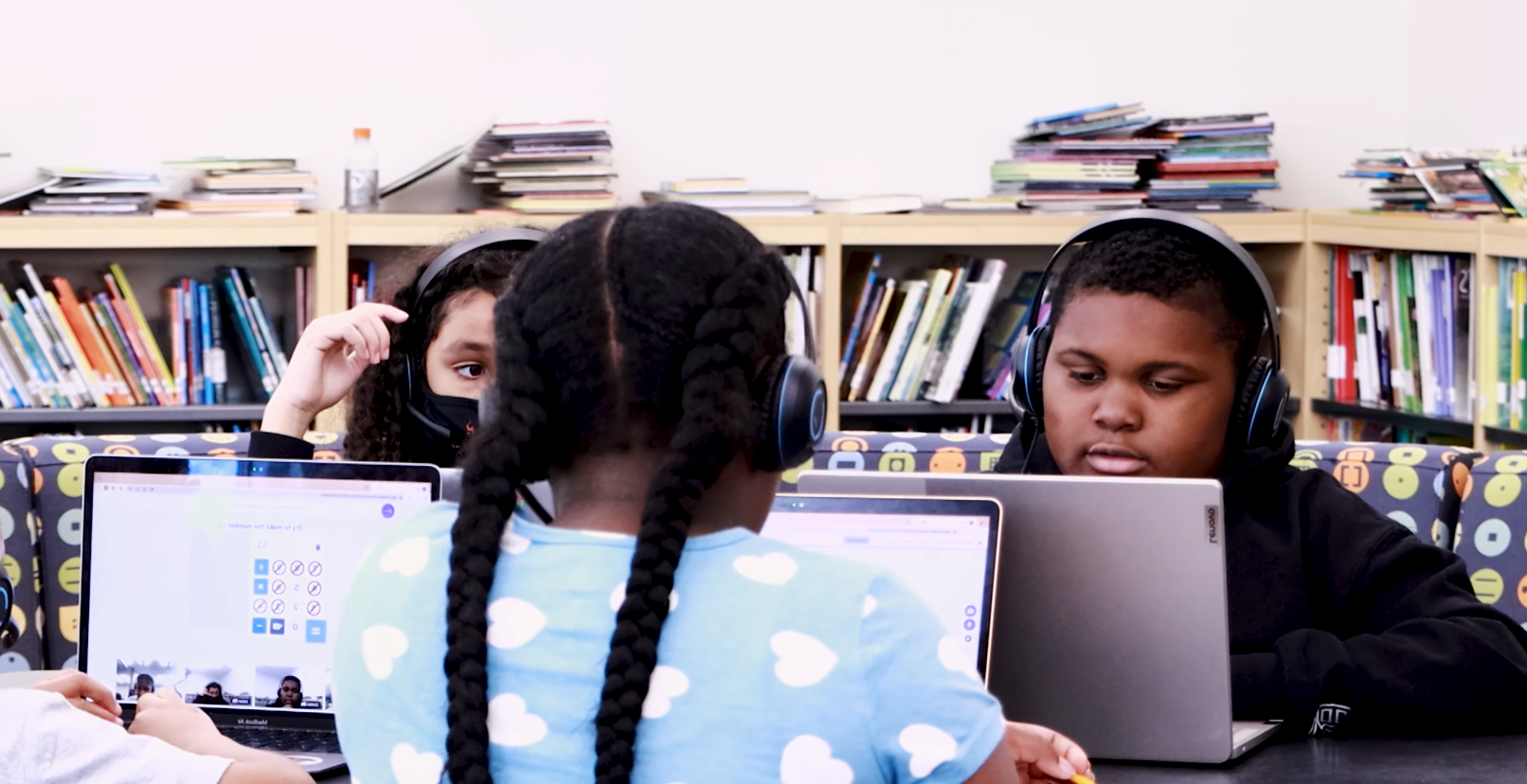
The Kindezi School at Gideons Elementary serves a high-need student population in Atlanta, Georgia. All students qualify for free or reduced-price lunch, and the student body is 96.8% minority.
The school places a strong emphasis on supporting both academic success and family well-being, offering wraparound services such as free grocery access, counseling, and housing support.
Within this context, improving math outcomes — particularly geometry — was an instructional imperative for the school's fourth-grade teachers.
Location: Atlanta, Georgia
School: Kindezi at Gideons Elementary
Grades: K-5
Enrollment: 323 students
Minority Population: 98%
Free & Reduced Lunch: 100%
31% of students showed geometry growth by mid-year
By mid-year, diagnostic data revealed a clear pattern: geometry was the lowest-performing math domain in the classroom. From the beginning of the year to mid-year, only 31% of students showed growth, and some demonstrated flat or declining performance.
These trends mirrored broader concerns at the school and network level, where leadership had observed minimal geometry growth across grades 3–5 over multiple years.
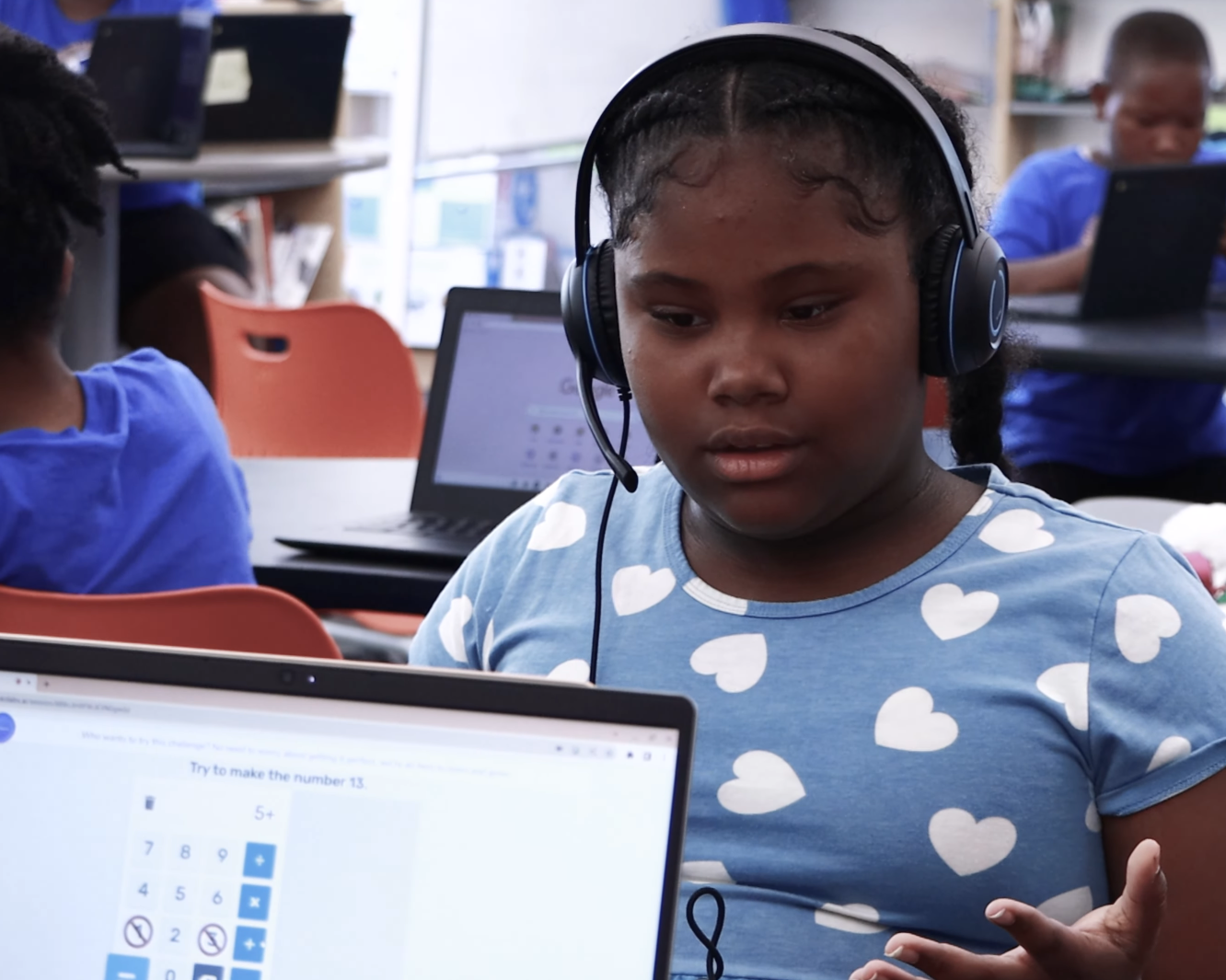
Midway through the year, Kelsey introduced OKO — an AI-driven platform designed to facilitate mathematical discourse during small-group instruction. Rather than replacing teaching, OKO was intentionally positioned as a complement to teacher-led instruction.
The OKO platform facilitated discussions by calling on students by name and prompting them to explain their reasoning — allowing discourse to continue even when the teacher was working with another group.
— K. Nesbitt, Math Teacher
Geometry concepts including shapes and their attributes. Groups differentiated based on i-Ready diagnostic data, ensuring instruction was aligned to individual student needs.
~20–30 minutes per week. Students solve problems independently, then explain their thinking, respond to peers, and collaborate when answers differ.
The impact of this shift was both immediate and measurable. From the beginning of the year to mid-year, geometry growth had been limited to just 31%. After implementing OKO during small groups, that number rose dramatically to 88%.
In addition to overall growth rates, students demonstrated meaningful progress against established benchmarks. Typical annual growth in geometry on the i-Ready diagnostic ranges from 20 to 25 points.
Met or exceeded typical annual growth benchmarks
Of students spending 100+ min on OKO met or exceeded growth targets
Showed measurable growth overall
"From the beginning of the year to the middle of the year, there was only 31 percent growth in geometry, but after implementing OKO's AI platform, there was an 87.5 percent growth in geometry."
— K. Nesbitt, Math Teacher
Beyond test scores, qualitative evidence pointed to deeper learning. Student journal reflections grew longer and more specific, with increased use of geometric vocabulary such as faces, vertices, angles, and sides.
Where students once wrote short, vague statements about how they felt about geometry, they began explaining why concepts made sense — or where confusion remained.
Notably, students frequently referenced the AI facilitator — nicknamed "Ms. OKO" — as a support in their learning. This reflected not just engagement, but a growing sense of confidence and willingness to participate in mathematical conversations.
"There was an increased use of geometric vocabulary and journal reflections showing deeper conceptual understanding."
— K. Nesbitt, Math Teacher
"I feel good about geometry because we have a chance to talk about it on OKO and I got to learn new and different shapes."
— 4th Grade Student, Kindezi at Gideons
Points on Diagnostic Assessments
One student receiving Tier 3 math intervention began the year performing at a 1st-grade level. By the end of the year, that student was performing at a 3rd-grade level, representing a 60-point gain on diagnostic assessments.
The approach also proved effective for students requiring intensive support.
Structured discourse, when paired with intentional instruction, can help close gaps for students who have historically struggled.
Students had been introduced to norms for discussion earlier in the year, which prepared them to engage productively without constant teacher facilitation when OKO sessions began.
The platform sustained high-quality mathematical discourse while freeing the teacher to focus on targeted instruction elsewhere in the room.
OKO fit seamlessly into existing routines and technology infrastructure. It did not add instructional burden.
For Kindezi, the implications extend beyond a single classroom. Geometry has long been a challenge at the school, network, and national level. This teacher-led study demonstrated that combining small-group instruction with AI-facilitated discourse can accelerate growth in a domain where progress has historically stalled.
The findings point to a scalable model — one that strengthens student understanding, supports teacher capacity, and creates space for meaningful mathematical conversation.
Looking ahead, Kindezi teachers are using OKO across additional math domains and to support other teachers in implementing the approach.

