
Students work in groups of two to five and explain their reasoning to each other. OKO listens and hints only when they're stuck. You get a live view of every group while the session runs, and a report on each one afterward showing the math and the collaboration. Built for grades 3-12.
Small groups are the most effective way to enhance classroom discussion and student peer relationships, but they're challenging for teachers. One teacher, five tables. Either the teacher sits with one table and can't support the others, or the teacher circles among them and struggles to provide meaningful feedback to any table.
Illustrative Mathematics and Eureka Math² ask for turn-and-talk and group discussion in nearly every lesson, and teachers are doing their best to deliver it. Getting authentic conversation going in every group, and giving students feedback on it, is a different problem.
OKO solves this challenge by supporting every student in every group.
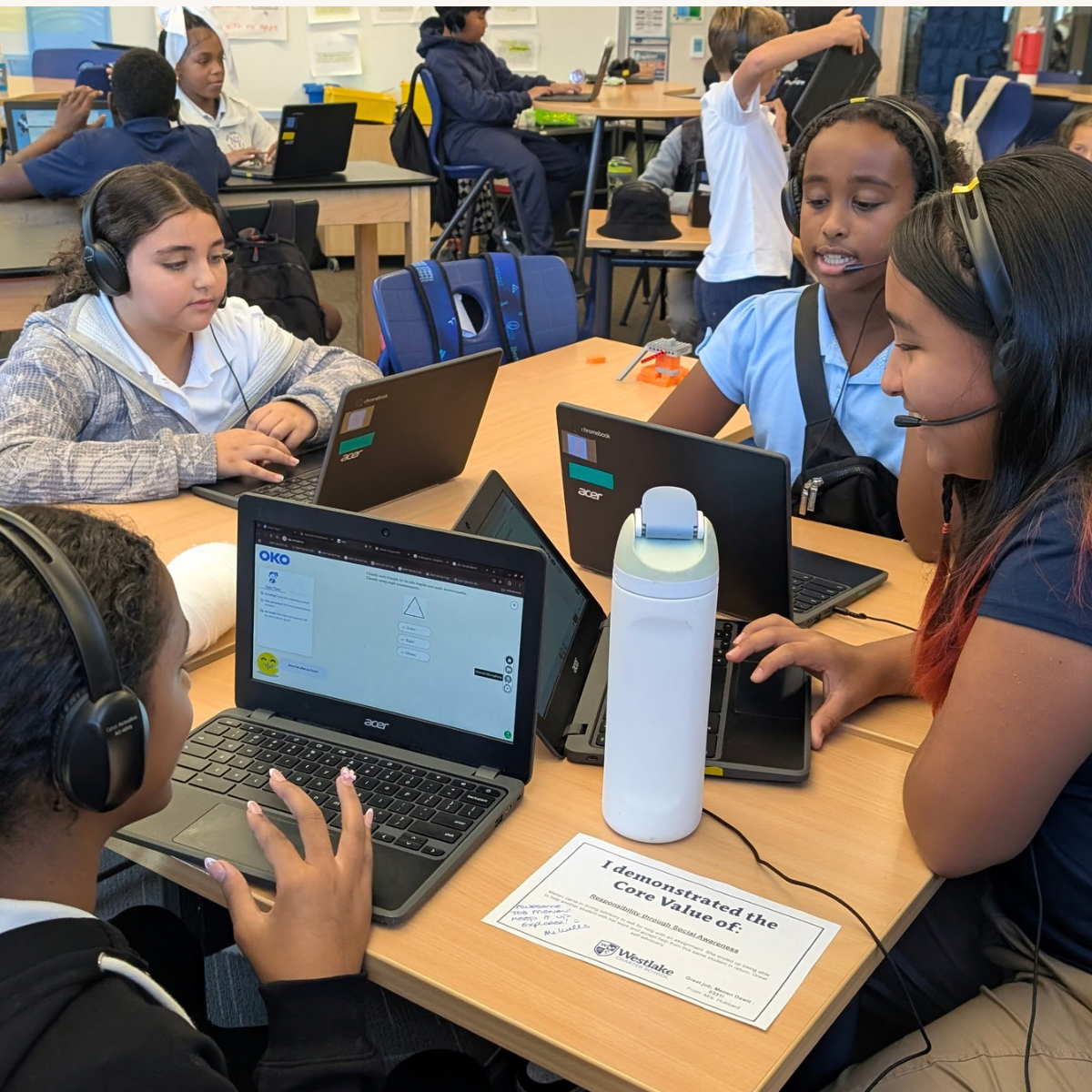
Four steps, in the order they happen in a session.
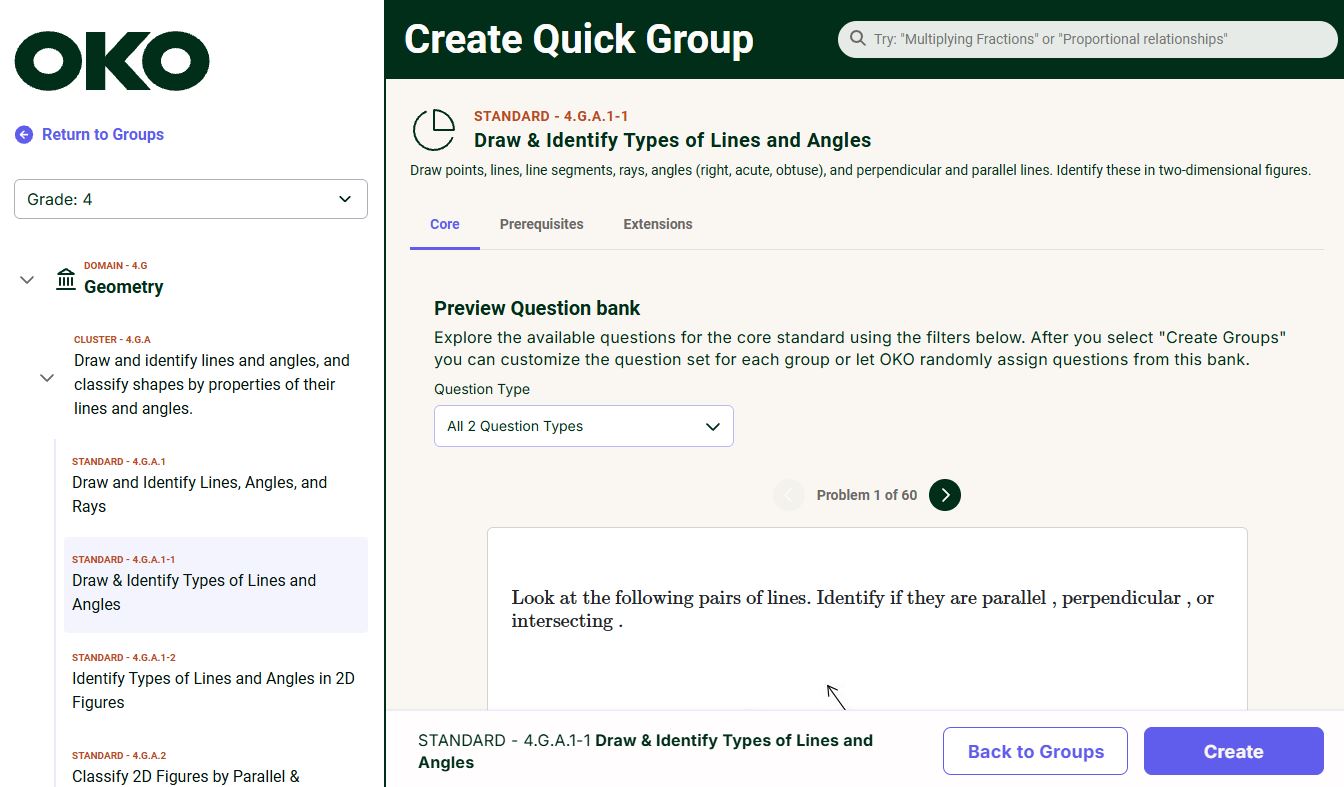
Pick a lesson or a standard. OKO builds multiple math problems from it, including a skills-focused task and a challenge task. Students join with a code, so you don't need a rostering integration.
Problem-based math works when the task has more than one way in and reasoning has to come before the procedure. Discussion-rich curricula like Illustrative Mathematics are built on tasks like that, which is why those curricula include so much group talk.
OKO is curriculum adjacent rather than curriculum embedded. For Illustrative Mathematics 360, alignment is at the lesson level: the lesson narrative, goals, and standards come straight from the scope and sequence. For Eureka and Eureka Math², alignment is at the scope-and-sequence level. Everything is tied to state standards, drawing on a bank of roughly 80,000 licensed items.
The task comes from your curriculum. OKO's work starts once the group opens it.
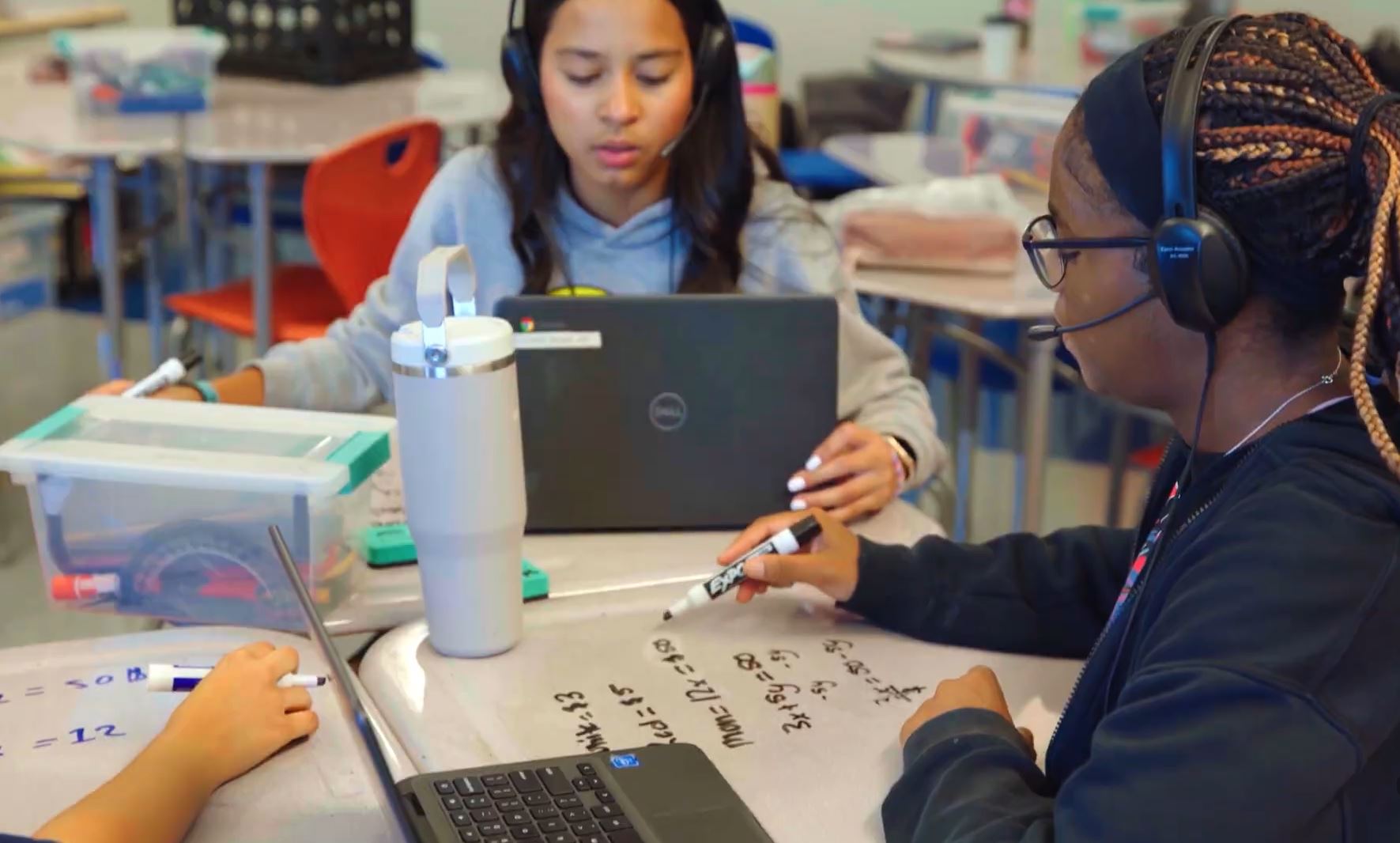
Groups of two to five work through the problem out loud. The math happens on paper and whiteboards. The device sits in the middle carrying the problem, the group's shared work, and OKO.
OKO hears the discussion and sees the shared work. No student is chatting with an AI; the conversation is between the students.
Math discourse, or math talk, involves students explaining, justifying, and questioning each other's mathematical ideas, and building on them. In a group doing it well, nobody is waiting for one student to answer. Everyone has reasoning to share, and they want to say it out loud.
A student can follow a procedure to get a correct answer for weeks without understanding how it works. Ask them to explain it to a peer and the underlying gaps become clear. Mathematical reasoning that has to be spoken can be heard, questioned, and corrected by others, which is what written answers alone don't allow. NCTM lists facilitating meaningful mathematical discourse among its eight core teaching practices.
In productive mathematical discussions, every student in the group is talking, rather than one student answering the teacher. OKO's job is to keep that going in the groups you can't sit with.
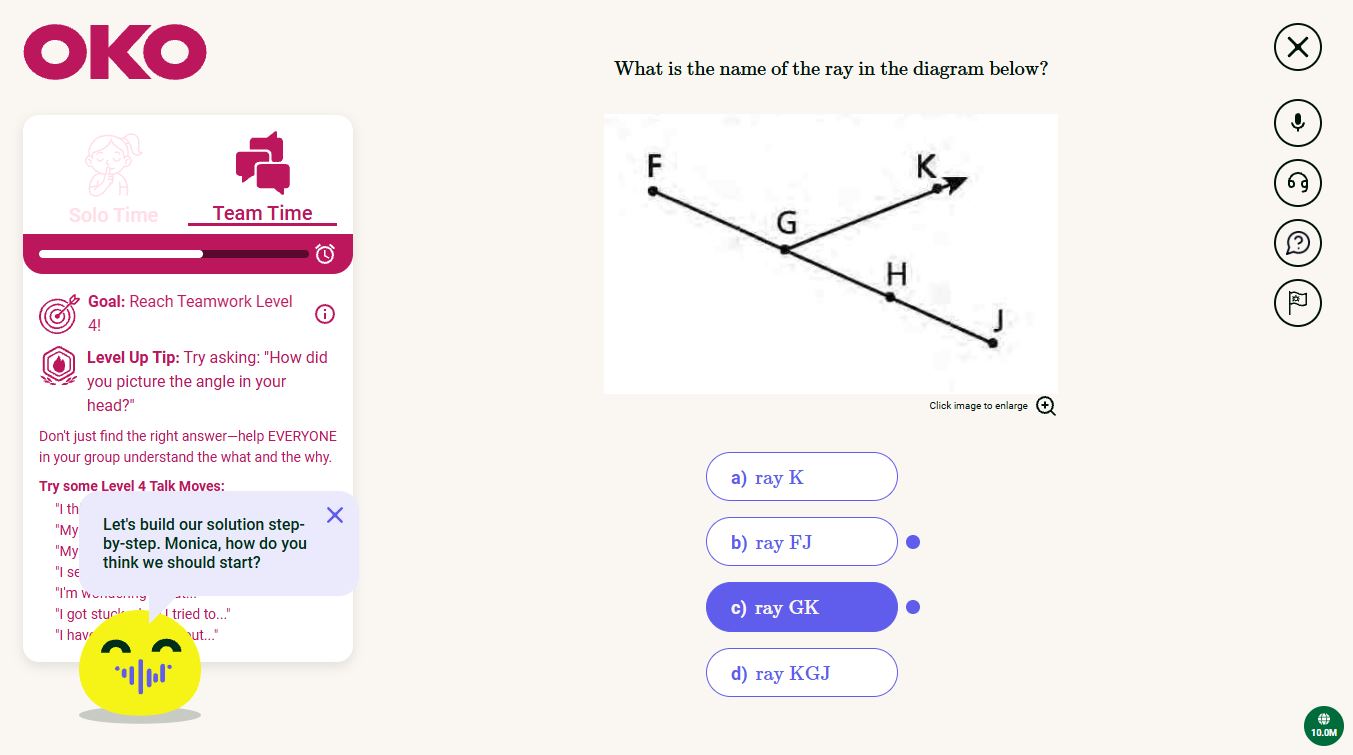
OKO asks the student racing ahead to slow down and explain, and provides a hint only when the whole group is stuck. Between tasks, OKO offers a tip focused on what the group got wrong.
It's not an answer machine, and not an answer-blocker.
Productive struggle is the stretch of time when students are working on something they don't yet know how to do. When help arrives too early, students tend to get the answer and lose the reasoning. When it arrives after they've worked at it, the understanding tends to stick.
OKO is built around that timing. It lets the group reason first and lean on each other, and it holds hints until the struggle stops being productive. Identifying a misconception is the last thing it does, after the group has had a real chance to work it out.
OKO uses techniques that a good facilitator uses at a single table. Rewording a student's idea so the group can respond to it. Asking for reasoning. Giving wait time. Including a student who hasn't spoken. Asking the student who's ahead to explain rather than announce.
Most teachers already know how to do this. Facilitating discourse at five tables at the same time is impossible for one person, so OKO does it at the tables you're not at.
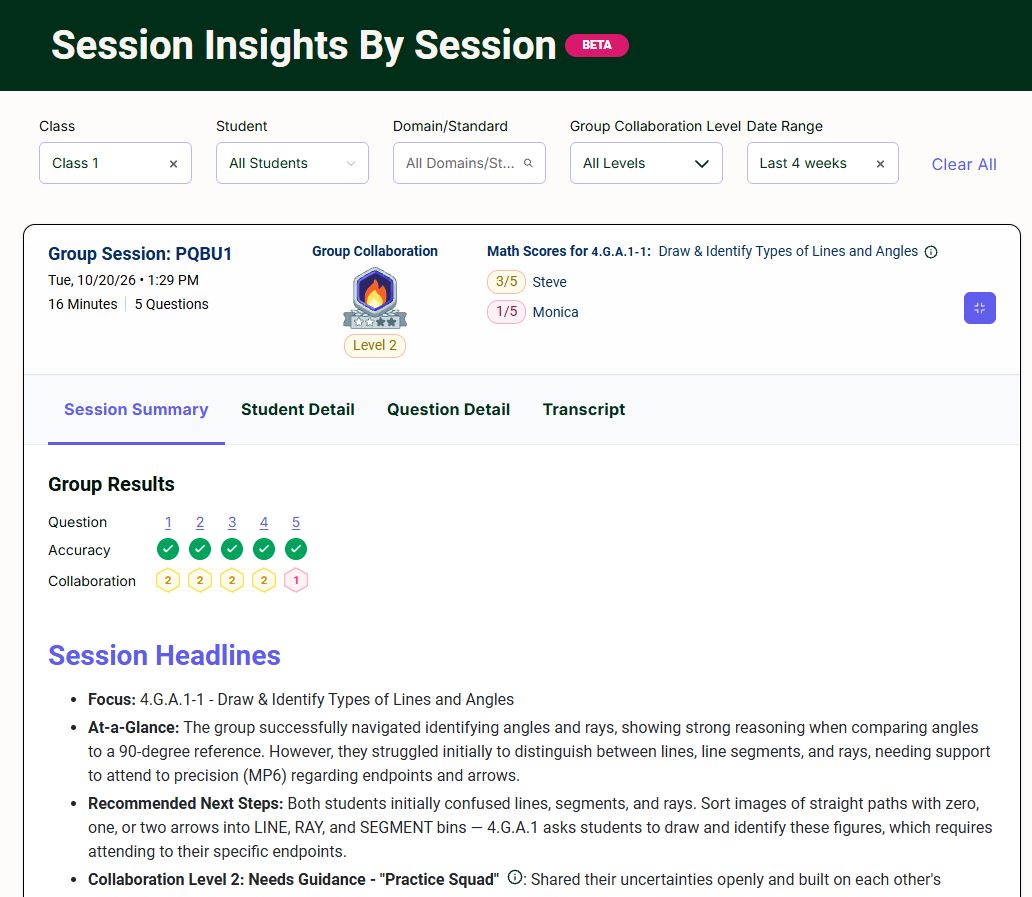
During the session, a live dashboard shows a collaboration score and accuracy for every group, with an alert when a group logs three wrong answers or three low collaboration scores in a row. You're in the room, circulating, working with the group that needs you.
After the session, you get a report on every group and every student: how they did on the math, how well they collaborated, and what the students said that led to the given rating.
Collaborative learning succeeds in math when the task is group-worthy, every student has a reason to participate, and the group can't finish by handing the work to its strongest member. That's what the research from Cohen and Lotan through Webb says, and it's the research OKO's collaboration rubric is built on.
The rubric describes how a group is working together, in four levels from Free Agent to Dream Team. It's meant to show direction and growth, so it's useful for watching a group or a student change over a semester. It isn't a precision instrument, and we don't present it as one.
The Class Insights Report groups sessions by standard and can be viewed daily or weekly. Coaches and administrators can open any teacher's classes and reports from their own account.
Recommended use: 30 to 45 minutes per student per week, divided into two or three sessions of 15 to 20 minutes.

Peer-to-peer facilitation. Students talk to each other.
A teacher in the room, working with the group that needs them most.
A record of how each student works with other people.

A chatbot. There's no private conversation between a student and a model.
More one-to-one screen time. The math is on paper.
A teacher replacement. It's an extra set of hands.
Conceptual understanding in math is knowing why a procedure works, as well as how to run it from start to finish. The quickest check is asking for an explanation: a student who understands can explain it to a peer who doesn't.
Discussion builds understanding and measures it at the same time: students who have to explain their thinking are working out the why while they talk.
"It's like having another teacher, but not."
— K. Nesbitt, Math Teacher at Kindezi at Gideons Elementary
Statistically significant pre-to-post math gains and a statistically significant reduction in math anxiety. The basis for OKO's ESSA Tier III and IV certificates (LeanLab).
Teachers using OKO report saving an average of 2.8 hours a week (self-reported).
Geometry proficiency from 31% to 88% in one term, by the school's own measure.
Read the Kindezi case studyOKO holds ESSA Tier III and IV certificates issued by LeanLab, based on the WestEd feasibility study.

Facilitation in every group, not just the one you're leading. A read on every student instead of a guess.
For Educators →Small-group instruction at scale inside the blocks you already run: WIN time, intervention, station rotation. ESSA Tier III and IV. FERPA and COPPA compliant.
For District Leaders →Quality discussion in every classroom you support. Lesson-level alignment to IM 360. Open any teacher's classes and reports from your own account.

